Count every target-language deliverable
A ten-minute source dubbed into five languages produces fifty target-language minutes before corrections. Some products quote a per-source-minute rate but apply it for each target language; other plans use credits or included allowances. Read the exact meter, then normalize it to source minutes per target language for the calculator.
Rerenders are common when names, terminology, emotion, speaker assignment, timing, or translation changes. Add them explicitly. Human translation, linguistic QA, audio editing, subtitle review, and client approval may exceed the generation bill, so the calculator keeps QA as a separate amount rather than pretending the API completes the whole localization job.
Benchmark the workflow, not one audio sample
Test multi-speaker overlap, background music, code-switching, brand names, numbers, emotional delivery, short utterances, long narration, and scenes with visible mouths. Record speaker detection, transcript edits, target translation, voice preservation, timing, lip-sync behavior, output formats, subtitle artifacts, and project export options.
Define an approval rubric per language with native reviewers. A provider may sound strong in one language and fail another. Measure time to first draft, reviewer minutes, correction cycles, final duration, and cost per approved target minute. Keep each target language as its own result so one weak locale does not disappear inside an average.
- Confirm whether source transcription and translation are included or separate.
- Verify voice consent, cloning rules, commercial rights, and regional processing.
- Preserve project and speaker identifiers when correcting one segment.
- Avoid rerunning an entire billed file when the provider supports segment-level edits.
Design for review and partial failure
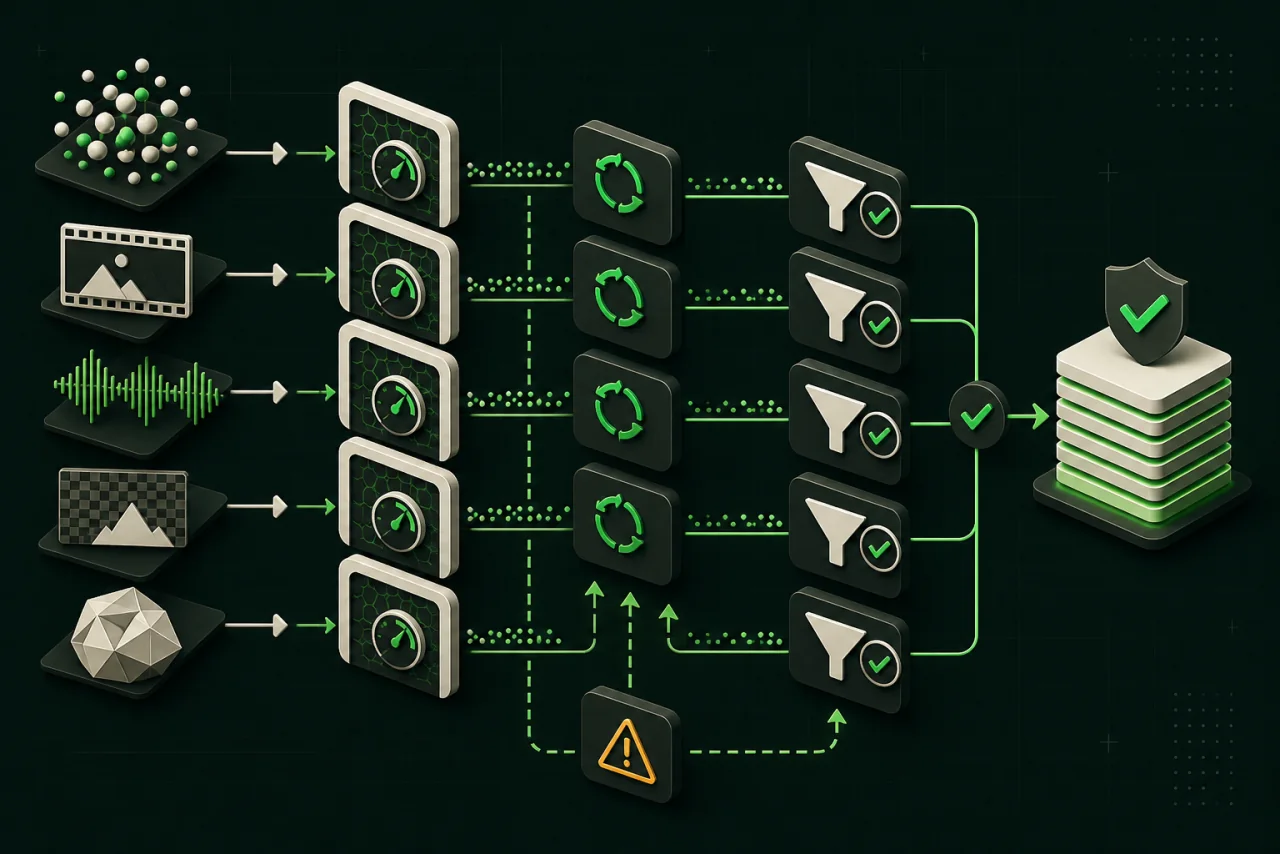
A dubbing job is a long-running workflow. Give it one internal job ID and explicit states for uploaded, transcribed, translated, generated, awaiting review, approved, failed, and cancelled. Map provider statuses behind an adapter and persist only the identifiers required to resume safely. A timeout should trigger a status check, not an automatic duplicate submission.
If one language fails, keep successful languages and retry only the failed unit when the provider contract allows it. Surface partial completion to the editor. Bounded retries, segment-level idempotency, and visible review states reduce both accidental spend and confusing customer support.
Common comparison mistakes
- Multiplying source minutes by one rate but forgetting the number of target languages.
- Assuming translation, lip sync, subtitles, and human QA are included.
- Judging all languages from one English-to-Spanish sample.
- Resubmitting a long file after a timeout without checking job status.
- Rerendering a complete project when only one segment failed review.
Questions developers ask
How is dubbing API cost calculated?
Start with source duration multiplied by target languages, apply the exact model rate and rerender allowance, then add translation, QA, editing, and delivery costs not included by the API.
Is dubbing just text-to-speech?
No. Dubbing can include transcription, translation, speaker detection, voice transfer, timing, separation, subtitles, and lip-sync, each with distinct quality and cost boundaries.
How should failed dubbing jobs be retried?
Check the existing job by its stable identifier first, retry only documented transient or failed units with a cap, and retain completed languages or segments.