Compare AI API prices in one place
Compare AI API prices by provider, model, or workload
Start with a provider profile, match an exact model across routes, or calculate the cost of the workload you need to ship. Every number keeps its first-party source and check date.
Provider evidence
Explore AI API providers by buying decision.
Understand the channel, billing meter, configuration, limits, and unresolved questions before treating a price as comparable.
fal.ai
A developer platform focused on fast inference for image, video, and audio models, with model-level pricing and serverless APIs.
Review evidence →Evidence profileReplicate
A model marketplace and deployment platform that exposes public and custom models through a consistent prediction API.
Review evidence →Evidence profileWaveSpeedAI
An API platform for image and video generation models with model routes, per-run or per-second pricing, and workflow-oriented endpoints.
Review evidence →Evidence profileKie.ai
A media-generation API provider that packages access to multiple image, music, and video model families.
Review evidence →Evidence profileOpenRouter
An OpenAI-compatible routing layer that offers one API across multiple language-model providers and exposes route-level pricing.
Review evidence →Evidence profileXiuRouter
A usage-based model API router with documented OpenAI, Anthropic, and Gemini protocol routes, scoped API keys, usage records, and source-linked model pricing.
Review evidence →Cost decision center
Normalize price by the output you can ship.
Calculate LLM, image, background removal, voice, dubbing, 3D, GPU, and video workloads without mixing unlike billing units.
Find the cheapest LLM API for your workload
Estimate the blended token bill for one production workload and identify which route is economically viable after non-price requirements.
Calculate workload →cheapest image generation APICompare the cheapest image generation API by accepted asset
Compare image APIs at one fixed output specification and budget the attempts required to deliver approved assets.
Calculate workload →background remover APICompare a background remover API by accepted image
Choose a background removal API that meets edge-quality and throughput requirements at the lowest cost per approved product image.
Calculate workload →cheapest TTS APIFind the cheapest TTS API for delivered speech
Estimate the cost of approved synthesized speech and shortlist a TTS route that meets voice, language, latency, and policy requirements.
Calculate workload →dubbing APICalculate dubbing API cost per delivered language minute
Estimate automated dubbing plus review cost for a multilingual release and choose a workflow that meets language, speaker, timing, and rights requirements.
Calculate workload →3D model APICompare a 3D model API by production-ready asset
Estimate the complete cost of accepted 3D assets and shortlist an API whose geometry, texture, format, latency, and rights fit the product.
Calculate workload →Model-level comparisons
Match the offer, not just the name.
Resolution, duration, audio, mode, tier, route, and region can change the effective price.
Seedance 2.0
Compare source-linked Seedance 2.0 video API offers by provider, resolution, mode, and audio configuration.
Compare offers →videoKling 3.0
Compare Kling 3.0 API rates only when mode, tier, resolution, duration, and audio settings match.
Compare offers →videoVeo 3.1
Review source-linked Veo 3.1 API pricing across first-party and hosted routes without mixing configurations.
Compare offers →videoLuma Ray 3.2
Compare Luma Ray 3.2 API routes at the same SDR, resolution, duration, mode, region, and fixed-request billing scope.
Compare offers →videoHailuo 2.3
Compare Hailuo 2.3 standard text-to-video routes only at the same 768p, six-second, no-audio request configuration.
Compare offers →videoWan 2.7
Compare exact Wan 2.7 text-to-video provider routes at 720p without audio using a source-linked per-second meter.
Compare offers →videoRunway Gen-4.5
Compare exact Runway Gen-4.5 text-to-video prices across owner-direct and marketplace routes without declaring a two-source winner.
Compare offers →textGPT-OSS 120B
Compare source-linked GPT-OSS 120B input and output token prices across provider routes while keeping infrastructure compute meters separate.
Compare offers →imageFLUX Image
Compare FLUX image API routes by exact model version, image meter, resolution, provider channel, and source-linked price.
Compare offers →imageRecraft V3
Compare exact Recraft V3 raster text-to-image routes by provider without mixing the separately priced vector model or editing operations.
Compare offers →imageSeedream 4.5
Compare exact Seedream 4.5 base text-to-image routes at one 2K output without mixing editing, sequential generation, or newer versions.
Compare offers →textGPT API
Compare GPT API routes by exact model ID, context band, input, cached-input and output meters, provider channel, and source.
Compare offers →textClaude API
Compare Claude API routes by exact model, context tier, input and output meter, direct or router channel, source, and effective date.
Compare offers →multimodalGemini API
Compare Gemini API routes by exact model, service channel, standard or batch tier, token meter, and first-party source.
Compare offers →imageNano Banana API
Compare Nano Banana API providers by exact model version, image resolution, output count, route, source, and per-image price.
Compare offers →textGrok API
Compare Grok API pricing by exact model, direct or router channel, context tier, token meter, and source-linked route.
Compare offers →imageGPT Image 2
Compare GPT Image 2 API providers by image size, quality, output count, route, first-party source, and per-image price.
Compare offers →textQwen API
Compare Qwen API pricing by exact model ID, provider channel, input and output token meter, context, and official source.
Compare offers →textKimi API
Compare Kimi API pricing across provider routes without mixing Kimi versions, token meters, context tiers, or service channels.
Compare offers →textGLM-5.2
Compare GLM-5.2 API token prices across provider routes with exact model identity, meter, tier, source, and check date.
Compare offers →textMistral Medium 3.5
Compare Mistral Medium 3.5 owner-direct and routed API evidence without treating two access channels as independent infrastructure or declaring a winner.
Compare offers →Reuse the evidence
Share an estimate, badge, or documented stack.
Each loop stays evidence-gated. APIDir will not mint a cheapest claim, embed unverified prices, or publish a stack without review.
Share a workload estimate
Turn clips and duration into a source-linked monthly estimate you can copy. The result never implies a cheapest provider.
Open the calculator →BadgeEmbed a cookie-free evidence badge
Link readers to a current first-party evidence profile. Historical pairs fall back to a neutral catalog badge.
Build the badge →FoundersSubmit a documented AI stack
Send public documentation or a repository. Submissions stay private until editorial and permission review.
Submit for review →APIDir method
Every number keeps its source.
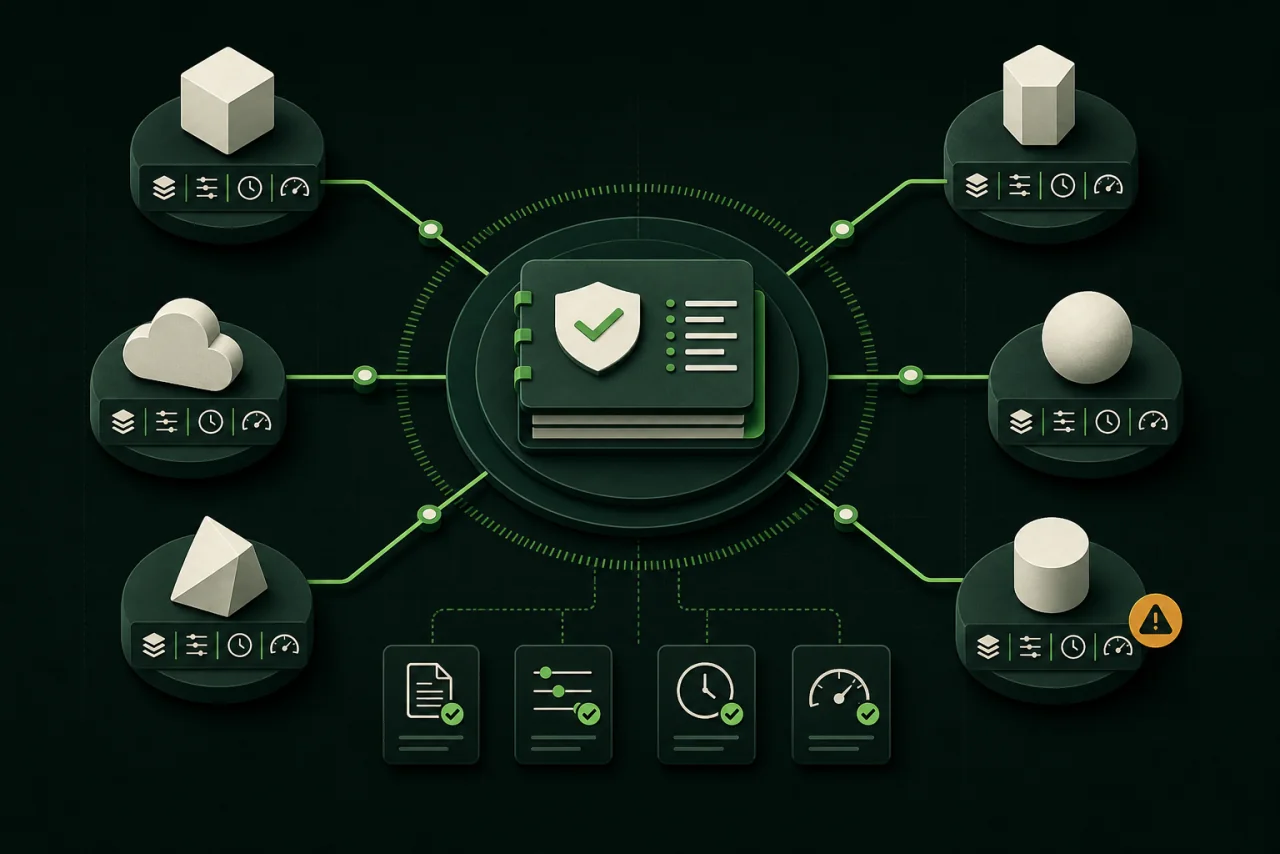
APIDir preserves offer identity instead of collapsing unlike configurations into a single headline. Material changes are quarantined until reviewed. Old observations remain visible as historical evidence but cannot drive a current recommendation.
Use cost calculators to normalize a workload, provider profiles to shortlist a route, and verified rankings to inspect truly comparable meters. Then open each first-party source before committing spend.
Questions developers ask
What does APIDir verify?
Every accepted observation records a provider route, model, billing unit, configuration, source URL, evidence hash, and check date.
Does APIDir name the cheapest provider?
Only when exact comparable offers are fresh. Stale or mismatched evidence cannot support a cheapest or savings claim.
Can providers pay for a better rank?
No. Future sponsorship will be clearly labelled and will never affect editorial ordering, evidence status, or price sorting.
Are documented integrations production-stack claims?
No. They describe what public source or first-party documentation shows and state the evidence boundary on every page.
APIDir Delta · controlled rollout
Join the source-linked pricing update waitlist.
Confirm your address to join the waitlist. Editorial delivery starts only after sender, suppression, and evidence checks are active.